Address
304 North Cardinal St.
Dorchester Center, MA 02124
Work Hours
Monday to Friday: 7AM - 7PM
Weekend: 10AM - 5PM

Address
304 North Cardinal St.
Dorchester Center, MA 02124
Work Hours
Monday to Friday: 7AM - 7PM
Weekend: 10AM - 5PM
ORAL SURGERY + ORTHODONTICS / YORKVILLE + WATERLOO
Helping a hidden tooth find its way into the smile.
WHEN A PERMANENT TOOTH DOES NOT ERUPT
An impacted tooth is a permanent tooth that remains partially or completely beneath the gum or bone instead of erupting normally.
Although wisdom teeth are frequently impacted, upper canine teeth are among the most common permanent teeth to require surgical exposure and orthodontic guidance. When there is adequate space and the tooth is positioned favourably, preserving and guiding the natural tooth into place may be possible.
SPACE
A permanent tooth may not have enough space to erupt normally within the dental arch.
PATH
The tooth may develop at an angle or encounter another tooth that blocks its path.
TISSUE
Dense tissue or bone can prevent eruption even when the tooth is otherwise present and developing.
DIAGNOSIS + 3D PLANNING
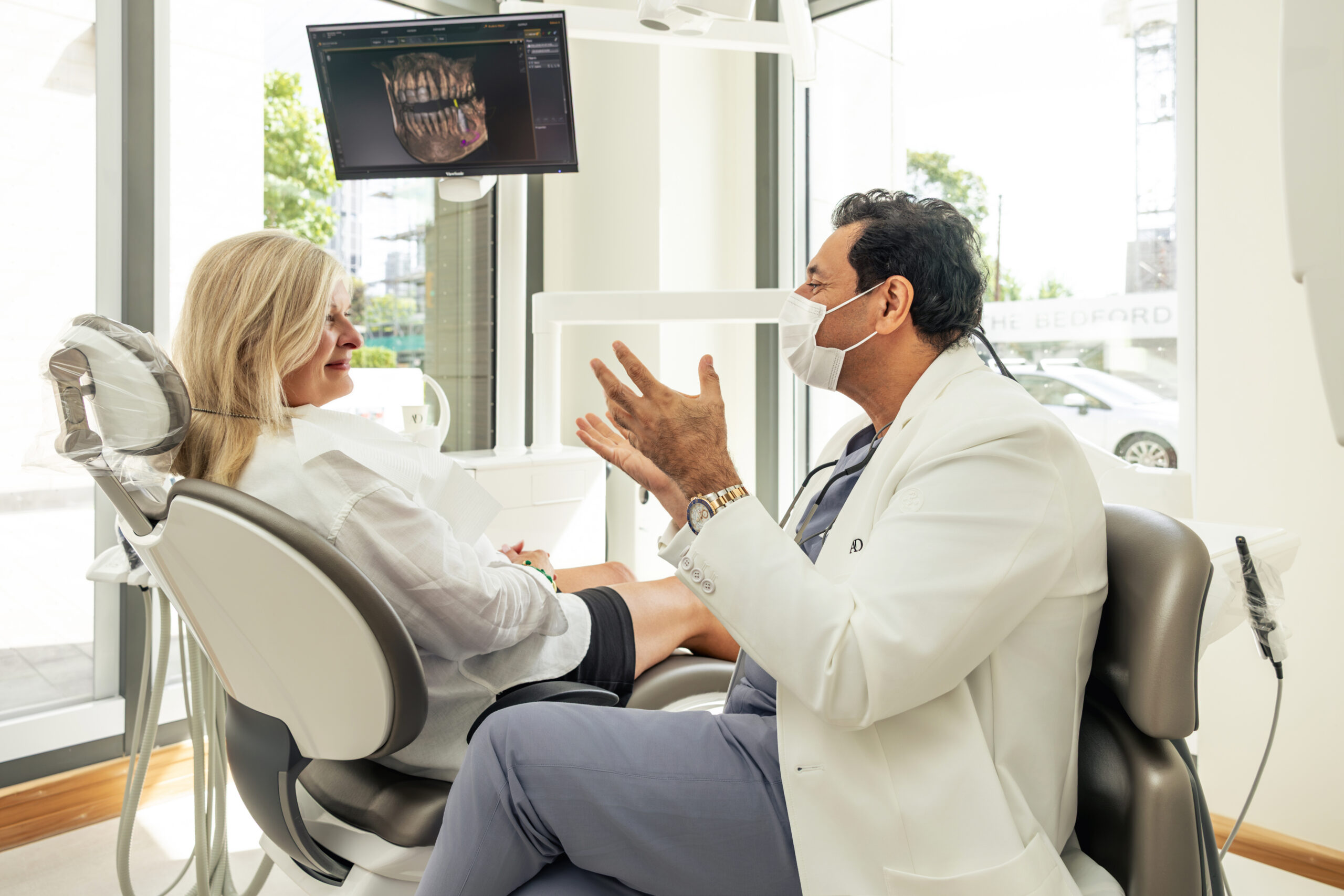
The first step is a dental and orthodontic assessment. The team considers the position of the impacted tooth, available space, neighbouring teeth and roots, the amount of bone covering the tooth, the bite and the overall orthodontic plan.
Dental X-rays and, in selected cases, 3D CBCT imaging can help show the tooth’s relationship to surrounding structures and support more precise treatment planning.
THE DECISION
An impacted tooth does not automatically need to be removed. Treatment depends on the tooth’s position, root development, available space, surrounding anatomy, overall oral health and whether orthodontic movement is realistically achievable.
01 / PREPARE
Orthodontic preparation may be used to create space. The surgical area is then numbed with local anesthetic, and sedation may be discussed when appropriate.
02 / EXPOSE
A small opening is created in the gum. A limited amount of tissue or bone may be removed when necessary to access enough of the tooth for orthodontic attachment.
03 / ATTACH
In many cases, an orthodontic bracket is bonded to the exposed tooth and connected to a delicate chain that can later be used for controlled traction.
04 / GUIDE
After healing begins, the orthodontist applies gentle traction over time so the tooth can move through the surrounding tissues toward its planned position in the arch.
A TEAM APPROACH
Exposure of an impacted tooth usually requires coordination between the clinician performing the surgical procedure and the orthodontic provider managing tooth movement.
The surgical stage creates access to the hidden tooth. The orthodontic stage gradually moves it toward the correct position. Careful coordination is important because the path of movement, available space and surrounding structures all influence the plan.
WHY PRESERVE THE TOOTH?
When a healthy tooth is favourably positioned, bringing it into the arch may help preserve natural tooth structure, bite function, arch alignment, smile symmetry and long-term oral function.
AFTER SURGERY
Some swelling, tenderness, minor bleeding or temporary chewing discomfort can occur after surgical exposure. Recovery varies with the location of the tooth and the extent of surgery.
Your dental team will provide instructions specific to your procedure and medical history.
FOOD + ACTIVITY
Soft foods such as yogurt, applesauce, eggs, soft pasta, mashed foods and cooled soups are often easier during early recovery. As tenderness improves, the diet can be advanced according to the instructions provided by the treating team.
Upper canine teeth are among the most common permanent teeth to require surgical exposure and orthodontic guidance, although other impacted teeth may also need treatment.
No. Depending on position, condition and available space, it may be possible to expose the tooth surgically and move it into place with orthodontic treatment.
When the goal is to bring the impacted tooth into the arch, orthodontic treatment is usually required to create space and apply controlled traction.
The surgical exposure is completed during an appointment, but orthodontic movement occurs gradually over months. The timeline depends on position, angle, available space and response to treatment.
The chain remains attached to the bonded orthodontic bracket and is used by the orthodontic provider to apply gentle, controlled traction.
Not every impacted tooth can be moved successfully. Tooth position, root development, ankylosis, surrounding anatomy and response to orthodontic movement can affect the outcome.